


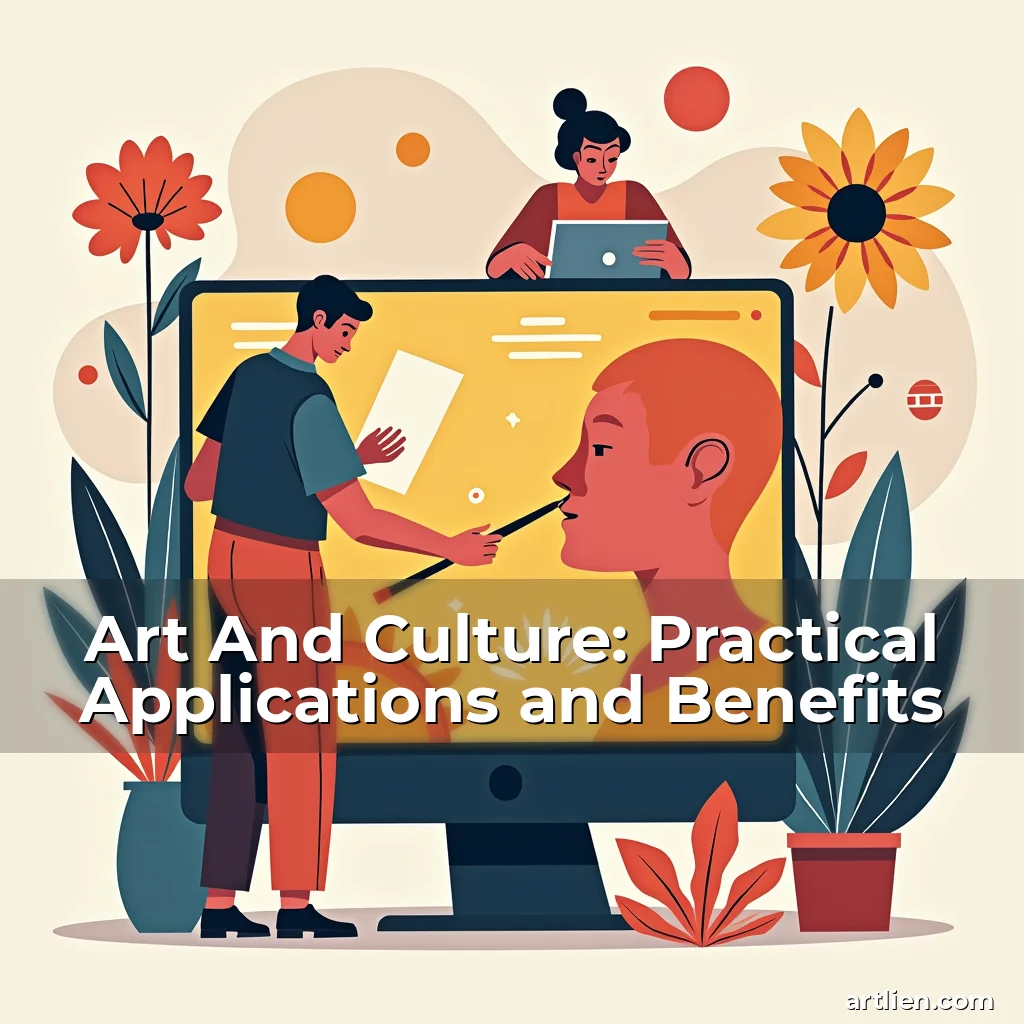
The Interwoven Tapestry: How Art Shapes and Reflects Global Cultures Through Time
In an era defined by rapid technological advancement and global connectivity, the relationship between art and culture remains as vital today as it has been through millennia of human history. This intricate dance between artistic expression and cultural identity continues to evolve, offering profound insights into our shared humanity.
From cave paintings in Lascaux to digital installations in contemporary galleries, art serves as both mirror and map—reflecting societal values while charting new paths forward. For creators navigating today’s dynamic landscape, understanding these interconnections is essential for producing meaningful work that resonates across boundaries.
Cultural Identity as Artistic Expression
Civilizations have long used visual storytelling to preserve their heritage and communicate core beliefs. Ancient Egyptian tomb paintings, for instance, reveal not only religious practices but also social hierarchies embedded within society. These artworks functioned simultaneously as historical records and spiritual guides.
Similarly, traditional Japanese ukiyo-e prints capture everyday life with meticulous attention to detail, reflecting shifting aesthetic ideals from the Edo period to modern times. Such works provide invaluable documentation of how cultures express themselves through formalized artistic conventions.
- Dance forms: From Bharatanatyam’s precise gestures to flamenco’s passionate footwork, movement arts embody cultural narratives passed down through generations
- Textile patterns: Indigenous weaving techniques often encode ancestral knowledge through color symbolism and geometric motifs
The role of artisans in preserving these traditions cannot be overstated. In many communities, skilled craftspeople act as living repositories of collective memory, ensuring continuity despite external pressures threatening cultural homogenization.
Modern artists frequently engage in cross-cultural dialogues, creating hybrid works that challenge conventional notions of authenticity. By blending elements from diverse traditions, they open pathways for reinterpreting cultural legacies in innovative ways.
The Evolution of Aesthetic Movements Across Continents
Artistic styles emerge organically through centuries of experimentation and exchange. The Renaissance in Europe, characterized by its revival of classical learning, parallels similar developments in Mughal India where Persian influences merged with indigenous aesthetics to create unique architectural marvels.
Such convergences demonstrate that innovation rarely occurs in isolation. When examining movements like Impressionism or Cubism, we must recognize parallel innovations happening concurrently in different parts of the world, each shaped by local contexts yet sharing universal aspirations toward capturing reality.
Regional Variations Within Broader Trends
A study by the World Art History Council found that during the late 19th century, Japan experienced a surge in Western-style painting while maintaining distinct stylistic features. Artists like Kuroda Seiki incorporated European techniques without losing sight of their national identity, illustrating successful integration rather than mere imitation.
This phenomenon isn’t limited to visual arts alone. Music genres such as Afrobeat blend traditional West African rhythms with jazz improvisation, showcasing how cultural synthesis can produce entirely new artistic languages. Similar fusions occur in literature, theater, and film across continents.
Contemporary examples include Korean pop music (K-pop) which combines hip-hop elements with traditional instruments, demonstrating ongoing dialogue between past and present. These syntheses reflect evolving cultural identities rather than simple appropriation.
Art as a Catalyst for Social Change
Throughout history, artists have played pivotal roles in shaping political landscapes. Frida Kahlo’s self-portraits transcended personal pain to become powerful statements about feminism and postcolonial identity. Her work continues to inspire activists worldwide decades after her death.
During the Civil Rights Movement in the United States, murals and posters became tools for mobilizing communities. Today, street art similarly functions as public commentary, addressing issues ranging from climate change to racial justice through visually striking compositions.
- Public art initiatives: Projects like São Paulo’s Museu do Ipiranga use historic buildings to showcase revolutionary themes relevant to current socio-political climates
- Performance art activism: Groups such as the Yes Men employ satirical tactics to expose corporate malfeasance and government corruption
These expressions highlight how artistic mediums enable marginalized voices to reach broader audiences. Digital platforms now amplify these messages exponentially compared to previous eras when dissemination was restricted by physical distribution channels.
The rise of NFTs (non-fungible tokens) presents new opportunities for artists to bypass traditional gatekeepers. While controversial, this technology democratizes access to markets previously controlled by established institutions, potentially reshaping power dynamics within the creative industry.
Technological Innovations Reshaping Creative Practices
Advancements in artificial intelligence are revolutionizing artistic production methods. AI-generated images produced by systems like DALL·E challenge conventional understandings of authorship and creativity. These tools offer unprecedented possibilities for exploration while raising complex ethical questions about originality.
Virtual reality environments allow immersive experiences that transcend physical limitations. Museums around the globe now feature VR exhibits enabling users to explore ancient sites or interact with historical artifacts in ways never before possible. This transforms passive observation into active participation.
Blockchain technology provides verifiable provenance tracking for digital artworks, addressing longstanding concerns about copyright infringement. As more collectors embrace token-based ownership models, the definition of what constitutes ‘art’ continues to expand dynamically.
Augmented reality applications enhance gallery spaces by overlaying digital layers onto real-world objects. This fusion creates multi-dimensional experiences that redefine viewer engagement with traditional media forms.
Educational Frameworks Supporting Cultural Preservation
Academic institutions play crucial roles in safeguarding intangible cultural heritage. Programs dedicated to studying folktales, oral histories, and ritual performances ensure these elements aren’t lost amid globalization’s tide. Universities increasingly collaborate with community elders to document endangered traditions.
Scholarly research into pre-colonial artistic practices helps restore narratives erased by dominant historical accounts. By analyzing materials and techniques used by indigenous groups, researchers contribute to decolonizing museum collections and academic curricula alike.
- Community-led archives: Initiatives like the Smithsonian’s Native American Archive Project prioritize indigenous perspectives in preservation efforts
- Interdisciplinary approaches: Courses combining anthropology with fine arts foster deeper understanding of cultural contexts behind various artistic outputs
Online educational resources make these studies accessible globally. MOOCs (Massive Open Online Courses) on topics ranging from calligraphy to documentary filmmaking empower individuals regardless of geographic location or financial means to learn specialized skills.
Virtual mentorship programs connect emerging artists with seasoned practitioners across borders. This facilitates knowledge transfer that would otherwise require costly travel or relocation, making cultural education more inclusive and sustainable.
Global Exhibitions as Cross-Cultural Platforms
Major international exhibitions serve as vital forums for cross-pollination among artists from disparate backgrounds. Events like Documenta in Germany or the Venice Biennale bring together creators who push boundaries while honoring their roots. These gatherings foster collaborations that might never occur under normal circumstances.
Curatorial choices at these events influence global perceptions of certain artistic traditions. When organizers deliberately seek out underrepresented voices, they help correct imbalances created by historically Eurocentric frameworks dominating mainstream discourse.
The inclusion of diasporic artists adds further complexity to these conversations. Their works often grapple with dual identities formed through migration experiences, enriching discussions about belonging and displacement in contemporary societies.
Technology enables virtual attendance at these exhibitions, broadening accessibility beyond elite circles. However, the tactile experience of physically encountering artwork remains irreplaceable for full appreciation of material qualities and spatial relationships inherent in installation pieces.
Fostering Creativity in Multicultural Environments
Urban centers with high levels of cultural diversity naturally become incubators for experimental art forms. Cities like London, New York, and Sydney host vibrant scenes where immigrant populations infuse local traditions with new energies. These interactions generate fresh perspectives that inform both commercial and avant-garde productions.
Collaborative projects between artists from different backgrounds yield unexpected results. Joint ventures may involve shared studio spaces, co-authored manuscripts, or multimedia installations merging varied technical expertise. Such partnerships break down silos that often hinder progress within isolated creative ecosystems.
Support structures like residencies specifically designed for multicultural exchanges prove particularly effective. Institutions providing housing and stipends encourage deep immersion periods during which participants develop mutual respect and understanding before beginning collaborative processes.
Language barriers sometimes pose challenges but ultimately lead to more inventive communication strategies. Visual metaphors, abstract symbols, and non-verbal cues become vital components of the creative vocabulary developed through these intercultural encounters.
Preserving Traditions While Embracing Innovation
Striking balance between honoring tradition and embracing change requires nuanced approaches. Many master artisans incorporate modern materials without compromising craftsmanship standards, proving adaptability doesn’t equate to dilution of value. Traditional dyeing techniques applied to synthetic fabrics exemplify this principle effectively.
Educational institutions face similar dilemmas regarding curriculum design. While foundational teachings remain essential, space must be made for exploring digital tools that extend expressive capabilities. Hybrid courses teaching both analog printmaking and computer graphics illustrate productive middle ground solutions.
Government policies significantly impact this equilibrium. Supportive legislation protecting intellectual property rights ensures fair compensation for those passing down ancestral knowledge while allowing room for reinterpretation by future generations.
Private sector involvement offers additional avenues for sustaining traditional practices. Partnerships between corporations and artisan cooperatives create economic incentives that motivate continued practice without forcing radical transformations that could alienate practitioners.
Conclusion
The symbiotic relationship between art and culture represents a dynamic force continually reshaping human civilization. As we’ve explored, this connection manifests through myriad dimensions—from individual expressions of identity to large-scale sociopolitical transformations.
For artists and creatives operating within this ever-evolving field, conscious engagement with cultural contexts becomes imperative. Whether working locally or globally, cultivating awareness of historical trajectories alongside contemporary innovations empowers creation that is both rooted and visionary.
“`


news is a contributor at ArtLien. We are committed to providing well-researched, accurate, and valuable content to our readers.
You May Also Like

Music theater and more : What happening in Snohomish County
The concert will be held at the historic Everett Theatre, located in downtown Everett, Washington.The Historic Everett Theatre: A Venue...
Portrait by humanoid robot to sell at auction in art world first
The Birth of a New Era in ArtThe art world is on the edge of a revolution, and it's not...
The Evolution and Impact of Digital Art in Contemporary Creativity
The Evolution and Impact of Digital Art in Contemporary Creativity Digital art has emerged as a transformative force within the...
Record Sales : Christie Highlights Emerging Artists Alongside Big Names
The sale was held at Christie's auction house in New York.The 21st-Century Evening Sale: A Record-Breaking AuctionThe 21st-Century Evening Sale,...