


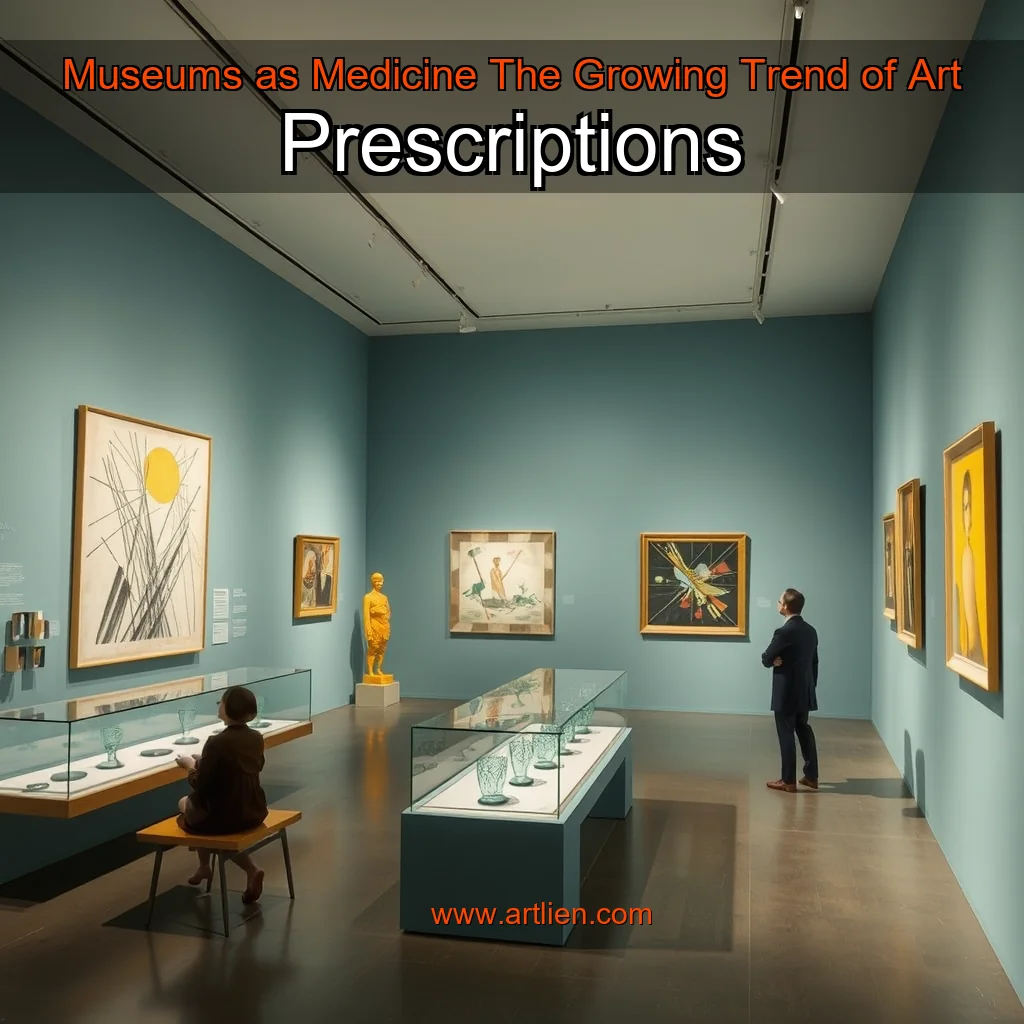
Social prescribing is a growing trend in healthcare, where healthcare providers recommend non-clinical interventions to support patients’ physical and mental well-being.
The Rise of Social Prescribing
Social prescribing has gained significant traction in recent years, with many healthcare providers recognizing the benefits of non-clinical interventions in supporting patients’ overall health and wellbeing. This approach has been shown to improve patient outcomes, reduce healthcare costs, and enhance the overall quality of care.
Benefits of Social Prescribing
The Role of Art in Social Prescribing
Art has been increasingly recognized as a valuable tool in social prescribing, offering a unique combination of emotional, cognitive, and social benefits.
The Rise of Arts Prescription Programs
The concept of arts prescription programs has been gaining momentum in recent years, with various organizations and companies exploring its potential benefits. The idea is simple: by prescribing art, healthcare providers can help patients manage stress, improve mental health, and even alleviate symptoms of chronic illnesses.
Benefits of Arts Prescription Programs
How Arts Prescription Programs Work
Arts prescription programs typically involve a healthcare provider referring a patient to an arts activity, such as a painting class or a music therapy session. The patient then attends the activity, which is designed to promote relaxation, creativity, and social interaction.
Examples of Arts Prescription Programs
The Intersection of Arts and Medicine
The intersection of arts and medicine is a rapidly growing field that seeks to harness the therapeutic potential of arts and culture to improve human health. EpiArts Lab is at the forefront of this movement, bringing together experts from both the arts and medical fields to explore the intersection of creativity and well-being.
The Science Behind Arts and Medicine
Research has shown that arts and cultural engagement can have a profound impact on both physical and mental health. Studies have demonstrated that arts therapy can be used to:
For example, a study published in the Journal of Music Therapy found that music therapy can be used to reduce symptoms of depression and anxiety in patients with Parkinson’s disease. The study showed that music therapy can help patients with Parkinson’s disease to:
The Role of EpiArts Lab
EpiArts Lab is a unique collaboration between the University of Florida Center for Arts and Medicine (UFCAM) and University College London.
However, the U.S. National Endowment for the Arts (NEA) has also found that arts and culture have a significant impact on the well-being of Americans.
The Economic Benefits of Arts Engagement
The U.K. government report highlights the significant economic benefits of arts engagement, with £8 billion worth of improvements in people’s quality of life each year. This figure is substantial, and it underscores the importance of arts engagement in promoting overall well-being. The report found that arts engagement can lead to:
- Improved mental health and wellbeing
- Enhanced cognitive function and creativity
- Increased social connections and community engagement
- Better physical health and reduced stress levels
- Education and employment
- Healthcare and social services
- Economic development and regeneration
- Participatory art projects: Arts for Everybody focused on participatory art projects, which allowed people to engage with the arts in a hands-on way. Community outreach: The campaign aimed to reach underserved communities, providing opportunities for people to engage with the arts and develop new skills. Social media platform: The campaign used social media platforms to promote the events and engage with participants.
With over 40 locations across the community health centers, the organization serves over 100,000 patients annually. The organization’s mission is to provide high-quality, patient-centered care to underserved communities in New York State.
History of the Urban Health Plan
The Urban Health Plan was founded in 1974 by a group of community leaders who recognized the need for comprehensive healthcare services in underserved communities. The organization’s early focus was on providing primary care services, including medical, dental, and behavioral health care.
news is a contributor at ArtLien. We are committed to providing well-researched, accurate, and valuable content to our readers.
You May Also Like

India South Korea art exchange project begins at Mala
The 2025 Jeonju International K-Pop FestivalThe 2025 Jeonju International K-Pop Festival is a highly anticipated event that promises to bring...
FARGO'S BIG ART EXHIBITION SPARKS VISUAL TREASURE
A Jewelry Store's New Life as a Haven for Local Artists A space that was once home to a jewelry...
San Antonio’s Vibrant Art Scene Brings Veterans Together
A Shared Experience The city of San Antonio is renowned for its rich cultural heritage and stunning art scene. Recently,...
Alexander McQueen : Savage Beauty Exhibition Review at The Metropolitan Museum of Art
The exhibition is a tribute to the iconic British designer, Alexander McQueen.The Legacy of Alexander McQueen: A Tribute at the...
The U.S. Perspective
In contrast to the U.K. government report, the U.S. National Endowment for the Arts (NEA) has a different set-up and cultural attitudes toward healthcare.
The Federal Theatre Project was a New Deal program that provided jobs for actors, writers, and other theatre professionals during the Great Depression. Arts for Everybody aimed to bring arts education to underserved communities and provide opportunities for people to engage with the arts.
The Origins of Arts for Everybody
The idea for Arts for Everybody was born out of a desire to revive the spirit of the Federal Theatre Project. Dr. Sonke, a theatre historian, was inspired by the project’s mission to bring arts education to marginalized communities. He saw an opportunity to create a modern-day equivalent, using social media and online platforms to reach a wider audience.


