


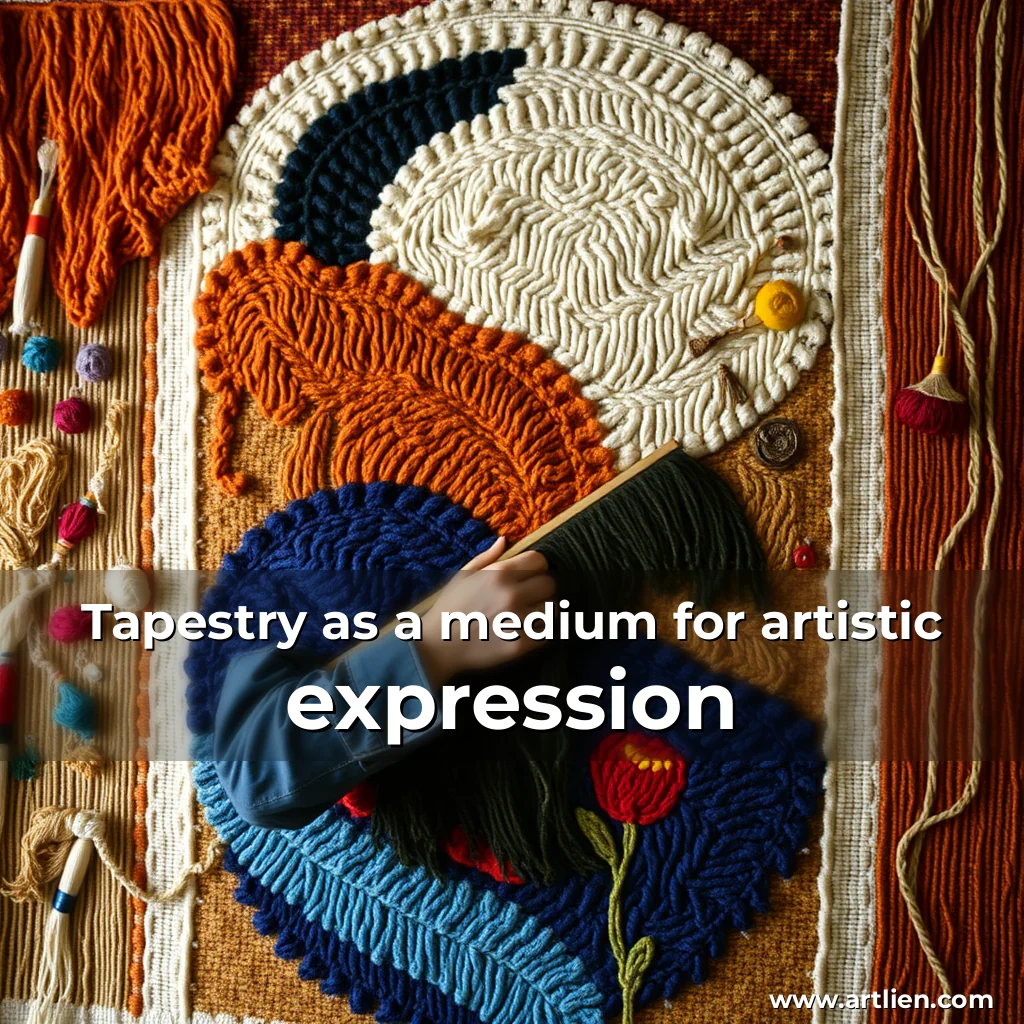
The limitations of traditional art mediums
As Rashid Choudhury once said, “I did not feel satisfied with the usual oils and watercolours. As piano and organ are excellent musical instruments but not much effective for solo performances, there are typical mediums in the field of art which have their limitations… I was, therefore, looking for a medium through which, I can fittingly depict men and nature of my motherland.”
• Rashid Choudhury was not satisfied with traditional mediums like oils and watercolours, which were deemed effective only for specific purposes
• He searched for a medium that would allow him to capture the essence of his motherland, leading him to tapestry as a medium of artistic expression
A brief history of tapestry
• Tapestry as an art form flourished in medieval Europe
• Introduced by Rashid Choudhury in the 1960s, tapestry became a popular medium for artistic expression in Bangladesh
• With its rich history and diverse applications, tapestry is a medium that continues to captivate artists and audiences alike
The avant-garde spirit of Rashid Choudhury
• Rashid Choudhury was a pioneer in the field of modern tapestry
• He immersed himself in avant-garde art movements and merged the spirit of indigenous forms of Bengal with European techniques
• Under the guidance of French artist Jean Lurçat, Choudhury settled on the medium he is most known for today
Characteristics of Rashid Choudhury’s tapestries
• Some of his creations are visual narratives, while others are far more abstract, evoking emotion and rhythm through form and texture
• His tapestries often carry figurative elements, such as stylised human forms recalling folk or mythological figures
• His use of colours is a reference to the strong, earthy palettes that evoke the landscapes and moods of the region
| Themes | Description |
|---|---|
| Hindu, Buddhist, and Islamic traditions | Rashid Choudhury’s use of themes drawing from these traditions expresses ethos true to our pluralistic heritage |
| Figurative elements | Stylised human forms recalling folk or mythological figures |
The impact of Rashid Choudhury’s tapestries
• His tapestries helped redefine the boundaries of Bangladeshi art
• His influence continues to be felt in the contemporary art scene
• As Choudhury himself once said, “Life finds its autonomy through expression. And we attain immortality through our actions.”
Photo: Durjoy Bangladesh Foundation (DBF)
Tapestry by Rashid Choudhury It is a testament to Choudhury’s genius that his tapestries continue to inspire and captivate audiences to this day.
His legacy as a pioneer in the field of modern tapestry will continue to be felt for generations to come.
As the art world continues to evolve, Rashid Choudhury’s tapestries serve as a reminder of the power of artistic expression in shaping our understanding of ourselves and our place in the world.
Today, we celebrate the life and work of this visionary artist, whose contributions to the world of art will never be forgotten.
His art continues to inspire us to explore, to create, and to express ourselves in all its forms, and for that, we are eternally grateful.
And so, we conclude by saying that Rashid Choudhury’s tapestries are not just works of art, but a reflection of the human spirit, and a testament to the enduring power of artistic expression.
As we look to the future, we hope that his legacy will continue to inspire future generations of artists, and that his art will continue to bring us closer to the beauty and wonder of the world around us.
For in the end, it is through the art that we create that we find our true selves, and that is a message that Rashid Choudhury’s tapestries will continue to convey for generations to come.
And so, we bid farewell to this remarkable artist, but not before we say that his tapestries will continue to be a source of inspiration and joy for us all.
And as we look to the future, we are reminded of the words of Choudhury himself, who said, “Life finds its autonomy through expression. And we attain immortality through our actions.”
And so, we continue to celebrate the life and work of Rashid Choudhury, and we are reminded that his art will continue to be a part of us, long after he is gone.
His legacy is a testament to the enduring power of artistic expression, and we are grateful to have had the opportunity to share in his vision and creativity.
And so, we conclude by saying that Rashid Choudhury’s tapestries are not just a reflection of the past, but a source of inspiration for the future.
And as we look to the future, we are reminded of the words of Choudhury himself, who said, “Life finds its autonomy through expression. And we attain immortality through our actions.”
And so, we bid farewell to this remarkable artist, but not before we say that his tapestries will continue to be a source of inspiration and joy for us all.
And as we look to the future, we are reminded of the words of Choudhury himself, who said, “Life finds its autonomy through expression. And we attain immortality through our actions.”
And so, we conclude by saying that Rashid Choudhury’s tapestries are not just a reflection of the past, but a source of inspiration for the future.
And as we look to the future, we are reminded of the words of Choudhury himself, who said, “Life finds its autonomy through expression.


news is a contributor at ArtLien. We are committed to providing well-researched, accurate, and valuable content to our readers.
You May Also Like

Transformative power of art: catalyzing social and personal evolution.
This is where mentorship comes in – a vital component in fostering a culture of creativity and innovation.The Importance of...
Museums as Medicine The Growing Trend of Art Prescriptions
Social prescribing is a growing trend in healthcare, where healthcare providers recommend non-clinical interventions to support patients' physical and mental...
The Iconic Dallas Home of Art Collectors Howard and Cindy Rachofsky Hits the Market
The stunning Preston Road property, designed by renowned architect Richard Meier, is now for sale, marking a significant milestone in...
Beyond Face Value : The Art and Legacy of French Banknotes At NGMA Mumbai
The Art of French Currency Design French currency, once a symbol of elegance and sophistication, has a rich history of...