


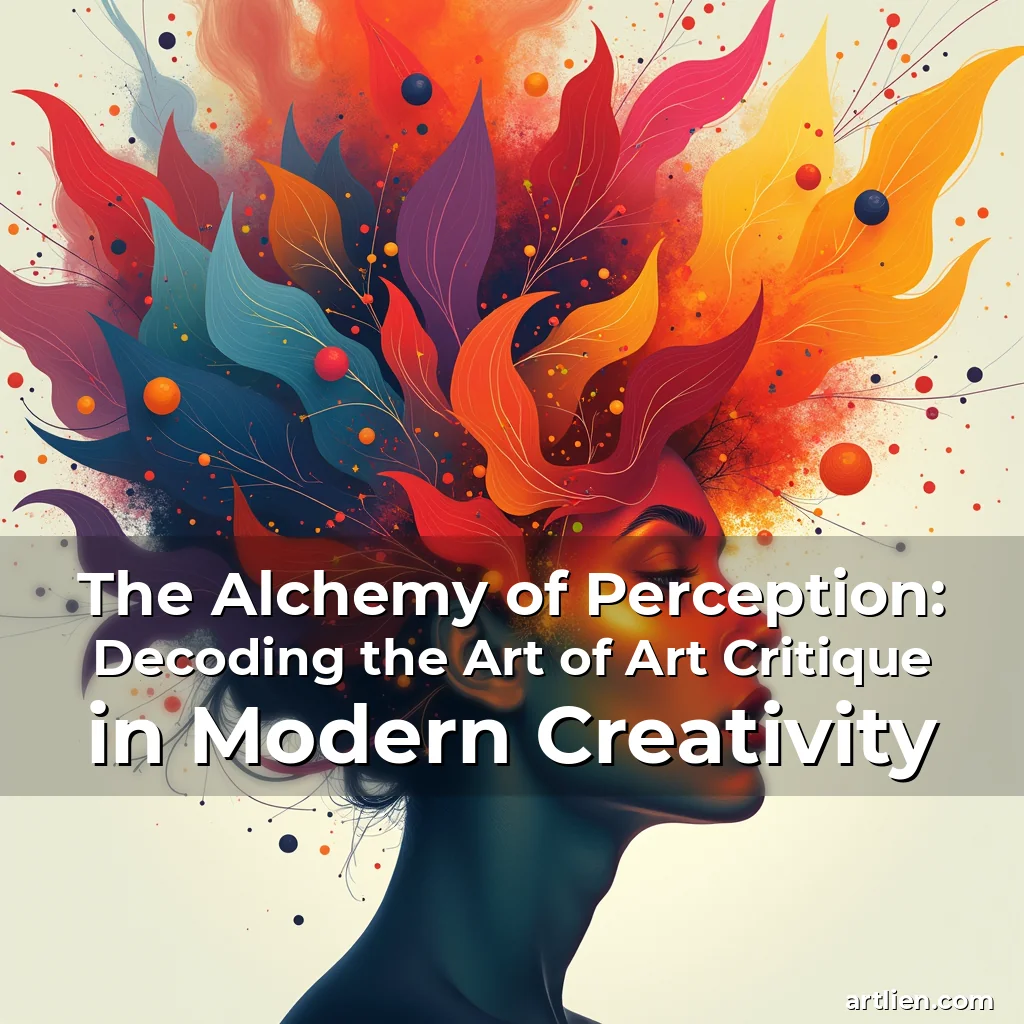
The Alchemy of Perception: Decoding the Art of Art Critique in Modern Creativity
In an era where visual culture dominates digital landscapes and artistic expression is both celebrated and scrutinized at unprecedented levels, understanding the nuances of art critique has become essential for any artist seeking growth and recognition.
This exploration delves beyond surface-level judgments to uncover how constructive criticism transforms raw talent into refined mastery through deliberate engagement with aesthetic principles, conceptual frameworks, and emotional resonance.
The Philosophical Foundations of Art Critique
At its core, art critique operates within a complex interplay between subjective experience and objective analysis that challenges our conventional notions of beauty and value.
This duality forces critics to navigate personal biases while maintaining analytical rigor, creating a dynamic tension that shapes contemporary discourse around creativity and interpretation.
- Subjective vs Objective Frameworks: While individual taste influences perception, structured methodologies provide measurable benchmarks against which artworks can be evaluated.
- Cultural Context as Lens: A piece’s meaning often shifts depending on historical background, societal norms, and technological advancements influencing its creation.
Philosophers from Kant to Adorno have debated whether true appreciation requires detachment or embraces personal connection, a debate still relevant when assessing modern multimedia installations or AI-generated visuals.
The challenge lies not only in articulating these perspectives but also in balancing empathy with intellectual inquiry without compromising either aspect.
Navigating the Terrain of Contemporary Art Criticism
Today’s art world presents a paradox – we live in an age of democratization where anyone can publish critiques online yet face an overwhelming flood of uncurated opinions.
This shift necessitates new strategies for discerning meaningful feedback amidst algorithmic noise, requiring both technical knowledge and critical thinking skills.
Traditional gatekeepers such as museum curators and gallery directors still hold influence, though their roles are increasingly complemented by social media influencers who shape public opinion instantaneously.
As virtual reality experiences gain prominence alongside traditional mediums, critics must adapt evaluation criteria to account for immersive technologies altering viewer interaction paradigms.
The Anatomy of Effective Art Critique
An effective critique balances descriptive accuracy with interpretative depth, offering insight rather than mere approval or dismissal.
It begins with careful observation of formal elements – composition, color theory, texture, line work – before progressing toward thematic analysis and contextual placement.
When evaluating performance art pieces, special attention must be given to spatial dynamics, temporal progression, and audience participation factors.
Multimedia works demand consideration of audiovisual integration, narrative flow, and technical execution across different platforms.
Quantifying Quality Through Analytical Metrics
While aesthetics remain inherently subjective, certain quantifiable metrics offer useful benchmarks for comparative assessments.
Studies show that viewers spend approximately 2 seconds longer engaging with compositions featuring golden ratio proportions compared to asymmetrical arrangements.
Color psychology research indicates that monochromatic schemes evoke greater calmness than vibrant palettes, although this varies significantly based on cultural associations.
These findings suggest that while originality matters greatly, foundational design principles continue to play crucial roles in viewer engagement.
Crafting Constructive Feedback for Artists
Providing helpful critiques demands sensitivity to both the artwork itself and the creator’s intentions behind it.
A well-structured approach might begin by acknowledging strengths before addressing areas needing improvement, ensuring encouragement remains central even during challenging discussions.
For emerging artists experimenting with mixed-media techniques, highlighting successful fusion points while suggesting refinements in material application can foster development without discouragement.
Established creators working on conceptually dense projects benefit most from analyses focusing on narrative coherence and symbolic consistency rather than superficial aspects.
The Role of Audience Reception in Evaluating Artworks
Contemporary practice increasingly recognizes that an artwork’s impact depends not solely on its intrinsic qualities but also on how audiences perceive and interact with it.
Sociological studies reveal patterns indicating that community-based art initiatives generate stronger emotional responses than purely exhibition-focused creations.
Interactive installations often see higher engagement rates when incorporating tactile elements that encourage physical participation over passive viewing experiences.
Data analytics tools now allow museums to track visitor movement patterns and dwell times, providing empirical evidence about what captivates versus repels observers.
Evaluating Impact Beyond Traditional Spaces
Digital platforms present unique challenges and opportunities for measuring artistic success through likes, shares, and viral potential.
Instagram analytics demonstrate that posts containing behind-the-scenes process shots receive 35% more engagement than finished product images alone.
This suggests that transparency regarding creative journeys enhances audience investment in the final output.
Virtual galleries using blockchain technology enable real-time tracking of user interactions, offering novel ways to assess reception across global demographics.
Bridging Disciplines: Interdisciplinary Approaches to Critique
Modern art practices frequently blur boundaries between disciplines, demanding expanded frameworks for assessment that accommodate hybrid forms of expression.
Critics specializing in bio-art require scientific literacy to appreciate genetic manipulations occurring within living organisms used as canvases.
Similarly, those analyzing architectural installations must consider structural integrity alongside aesthetic considerations in their evaluations.
Performance theorists bring distinct perspectives when examining durational works that exist primarily in transient moments rather than fixed objects.
Revisiting Historical Methods for New Mediums
Many ancient appraisal systems find renewed relevance when adapted for contemporary contexts.
Japanese wabi-sabi philosophy offers insightful parallels for judging decay processes in time-based media like film or video installations.
Chinese ink painting traditions emphasize brushwork precision and negative space usage – principles applicable to digital illustration workflows today.
By revisiting these timeless approaches, critics develop richer vocabularies capable of capturing nuance across diverse artistic manifestations.
Cultivating Critical Thinking Skills Among Creative Professionals
Developing strong evaluative abilities benefits not only critics but also artists themselves, enabling them to refine their own work through self-assessment.
Workshops focused on deconstructing masterpieces help participants recognize compositional choices made by renowned practitioners throughout history.
Engaging with theoretical texts exposes creatives to philosophical debates shaping current trends in postmodernism and conceptual art.
Prompting reflective journaling encourages deeper introspection about motivations driving artistic decisions.
Fostering Intellectual Curiosity Through Dialogue
Encouraging open-ended conversations among peers fosters environments where questions outnumber answers, stimulating continuous learning cycles.
Group critiques following studio visits promote collaborative problem-solving rather than competitive judgment, nurturing supportive communities centered on mutual growth.
Regularly attending exhibitions accompanied by guided discussion sessions sharpens observational skills while exposing individuals to varied stylistic approaches.
Participating in panel discussions with established figures provides direct access to industry insiders’ thought processes and decision-making rationales.
The Future of Art Critique in Digital Age
Rapid technological advances continually reshape how we engage with and evaluate artistic productions, presenting both exciting possibilities and ethical dilemmas.
Augmented reality applications now allow users to overlay critical annotations onto physical artworks via mobile devices, transforming static displays into interactive dialogues.
Machine learning algorithms trained on vast datasets of previous critiques could potentially assist human reviewers by identifying common themes across similar genres.
However, reliance on automated systems risks reducing nuanced interpretations to simplistic data points devoid of context and cultural awareness.
Preserving Human Element Amidst Technological Evolution
Despite algorithmic capabilities, human intuition remains irreplaceable in grasping subtleties lost upon mechanical processing.
Emotional intelligence continues to define quality critiques, distinguishing between technically proficient works lacking soul versus emotionally resonant pieces with minor imperfections.
Personal anecdotes shared during informal gatherings often reveal profound connections formed between artists and their audiences that quantitative measures cannot capture fully.
Therefore, while embracing innovation, it is vital to maintain spaces dedicated exclusively to organic, non-digitally mediated exchanges of ideas and impressions.
Conclusion
Art critique functions as both mirror and compass – reflecting back current artistic trajectories while guiding future directions through thoughtful examination of past achievements and ongoing innovations.
Whether delivered verbally in gallery settings or written for publication, effective criticism requires equal parts expertise, empathy, and imagination to truly serve its purpose of advancing collective understanding within creative fields.


news is a contributor at ArtLien. We are committed to providing well-researched, accurate, and valuable content to our readers.
You May Also Like

Modern contemporary art established young artists : 16th edition of India Art Fair has something for everyone
The vibrant colors and lively atmosphere of the street art scene in Delhi are undeniable.The Street Art Scene in DelhiThe...

Shalini passi's iconic bag collection: exquisite accessories shaped like parrots, teddies, and flamingos worth as much as cars!
The Kapil Sharma Show is a popular Indian television series that aired from 2011 to 2016. The show was hosted...

Artist makes case motherhood a catalyst for creativity Winnipeg Free Press
The exhibition explores the complexities of this relationship through a series of images that juxtapose the domestic and the public,...

Longview Public Library to host art for wellnes event
Preparing for the Workshop The Longview Public Library is excited to host a creative arts for health and wellness workshop,...