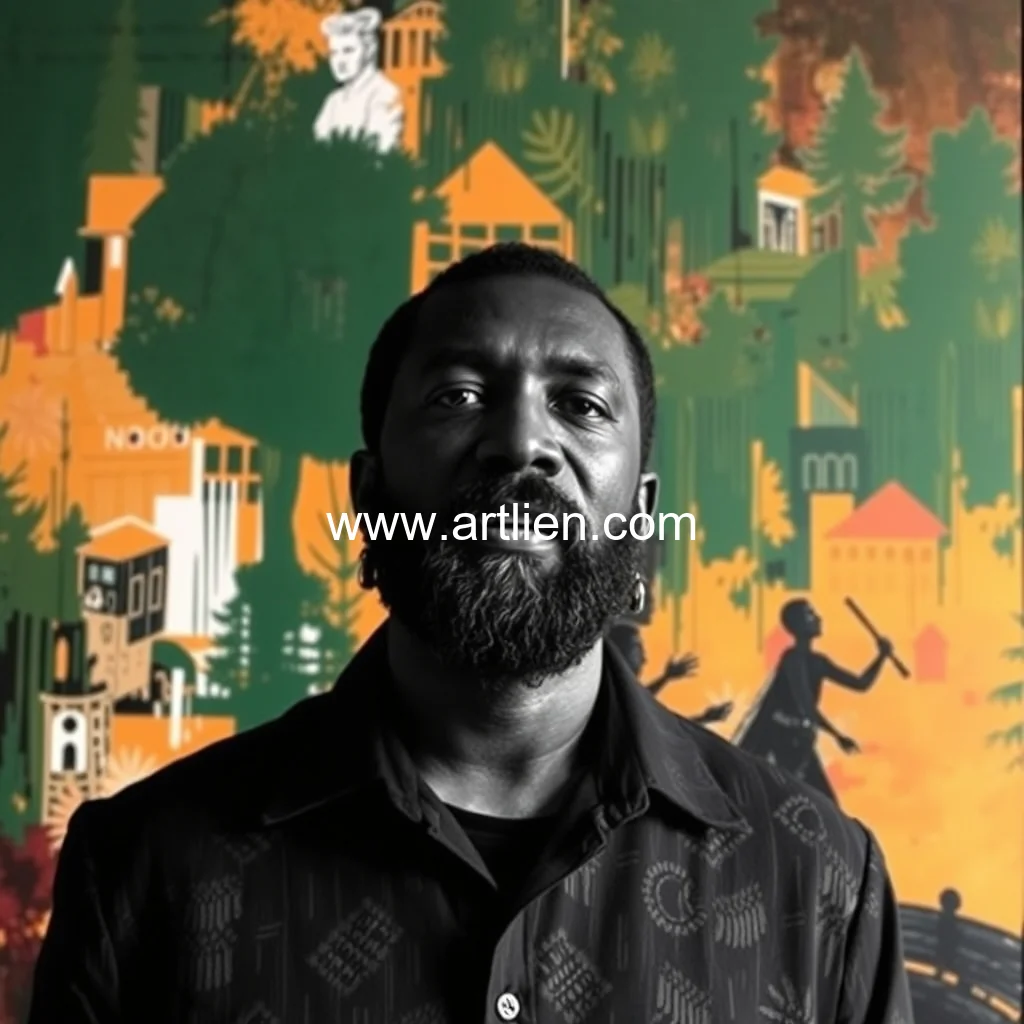
Through his art, Ben Kay seeks to challenge dominant narratives and promote a more inclusive and equitable world.
The Roots of Ben Kay’s Artistic Vision
Ben Kay’s artistic journey began with a deep fascination with the African diaspora and its complex history. Growing up in a multicultural environment, he was exposed to various art forms and cultural expressions that shaped his perspective on the world.
Ben’s unique perspective combines elements of visual arts, performance, and storytelling, making him an innovative artist. His work is characterized by bold colors, intricate patterns, and a deep respect for African cultural traditions. Ben’s artistic vision is deeply rooted in his personal experiences and the cultural heritage of his homeland. His use of visual storytelling allows him to convey complex emotions and ideas, making his work accessible to a wide audience. Ben’s artistic style is both deeply personal and universally relatable, reflecting the diversity and richness of Ghanaian culture. His work challenges the dominant Western art historical narratives and offers a fresh perspective on the African diaspora. Ben’s artistic practice is a testament to the power of cultural exchange and the importance of preserving traditional knowledge and customs. He is a true artist of the 21st century, pushing the boundaries of what is possible with art and challenging our perceptions of the world around us.
Step 1: Introduction to Ben’s Artistic Focus
Ben’s artistic focus on Afrocentric visual storytelling is deeply rooted in his cultural heritage. Growing up in Ghana, he was exposed to a vibrant cultural landscape that has significantly influenced his artistic practice. The country’s rich cultural traditions, including its music, dance, and art, have had a profound impact on Ben’s work.
Step 2: Influential Artists and Films
Ben’s artistic practice has been shaped by a range of influential artists and films. For example, Bill Viola’s use of video art has inspired Ben to experiment with new mediums and techniques.
The image captures the intersection of human suffering and environmental degradation.
The Power of Conceptual Photography
Conceptual photography, a genre that has gained significant attention in recent years, has the power to challenge societal norms and spark meaningful conversations. One of the pioneers of this genre is Ben Kay, a photographer known for tackling complex issues such as health crises, resource exploitation, and cultural identity.
The Intersection of Human Suffering and Environmental Degradation
Ben Kay’s conceptual photograph featuring a model with a nebulizer connected to a globe poignantly illustrates Africa’s struggles during global health crises. The image captures the intersection of human suffering and environmental degradation, highlighting the devastating impact of climate change on vulnerable communities. The nebulizer, a device used to deliver medication, is connected to a globe, symbolizing the global reach of health crises and the interconnectedness of human suffering. The model, a representation of the African continent, is positioned in a way that emphasizes the vulnerability and fragility of the human body. The use of a globe as a prop serves as a powerful metaphor for the global nature of health crises, emphasizing the need for international cooperation and collective action.
The Impact of Resource Exploitation
Ben Kay’s work also explores the impact of resource exploitation on local communities and the environment. His photographs often feature images of natural resources, such as oil, gas, and minerals, juxtaposed with images of human suffering and environmental degradation. The use of natural resources as a backdrop for human suffering highlights the exploitation of vulnerable communities and the environment.
The Power of Public Exhibitions
Public exhibitions have a profound impact on an artist’s development, providing a platform for them to showcase their work and receive feedback from a diverse audience. This exposure can be instrumental in shaping an artist’s style, technique, and overall artistic vision. Key benefits of public exhibitions for artists:
- Exposure to a diverse audience
- Feedback and criticism from peers and art enthusiasts
- Opportunities for networking and collaboration
- Development of artistic style and technique
- Increased visibility and recognition
- Verbal comments from viewers
- Written reviews and critiques
- Social media engagement and online discussions
- Peer feedback and reviews from fellow artists
The Role of Feedback in Artistic Growth
Feedback from exhibitions can be invaluable for artists, providing a unique opportunity to refine their work and gain new insights. This feedback can come in many forms, including verbal comments from viewers, written reviews, and even social media engagement. Types of feedback artists can receive:
The Impact of Public Exhibitions on Artistic Vision
Public exhibitions can have a profound impact on an artist’s artistic vision, influencing their style, technique, and overall approach to their craft.
The use of natural elements, like leaves, branches, and flowers, adds a sense of organic and earthy feel to the visuals, while symbolic props, such as the recurring motif of the rose, convey deeper meanings and themes. The lighting is meticulously designed to create a dreamlike atmosphere, with soft, warm tones that evoke a sense of nostalgia and longing.
The Art of Visual Storytelling
Ben’s visual style is a masterclass in storytelling, weaving together disparate elements to create a cohesive and captivating narrative.
By fostering a sense of community, these initiatives encourage collaboration and mutual support among creatives.
The Power of Collaboration
Collaboration is a powerful tool that can elevate the quality of artistic work and foster a sense of belonging among creatives.
The Power of Immersive Media
In an era where traditional storytelling is evolving, Ben Kay is at the forefront of a new wave of immersive media. This innovative approach to filmmaking is revolutionizing the way we experience and engage with stories. Immersive media combines traditional storytelling techniques with cutting-edge technology to create a more immersive and interactive experience for the audience. Key characteristics of immersive media include: + High-definition visuals and 3D audio + Interactive elements, such as virtual reality (VR) and augmented reality (AR) + Real-time data visualization and analytics + Personalized storytelling and audience engagement
The African Experience
Ben Kay’s commitment to sharing powerful narratives that reflect the African experience is a testament to his dedication to telling stories that matter.
For more about his work, visit (http://www.benkayvisuals.com) and follow him on Instagram @benkay_.

news is a contributor at ArtLien. We are committed to providing well-researched, accurate, and valuable content to our readers.