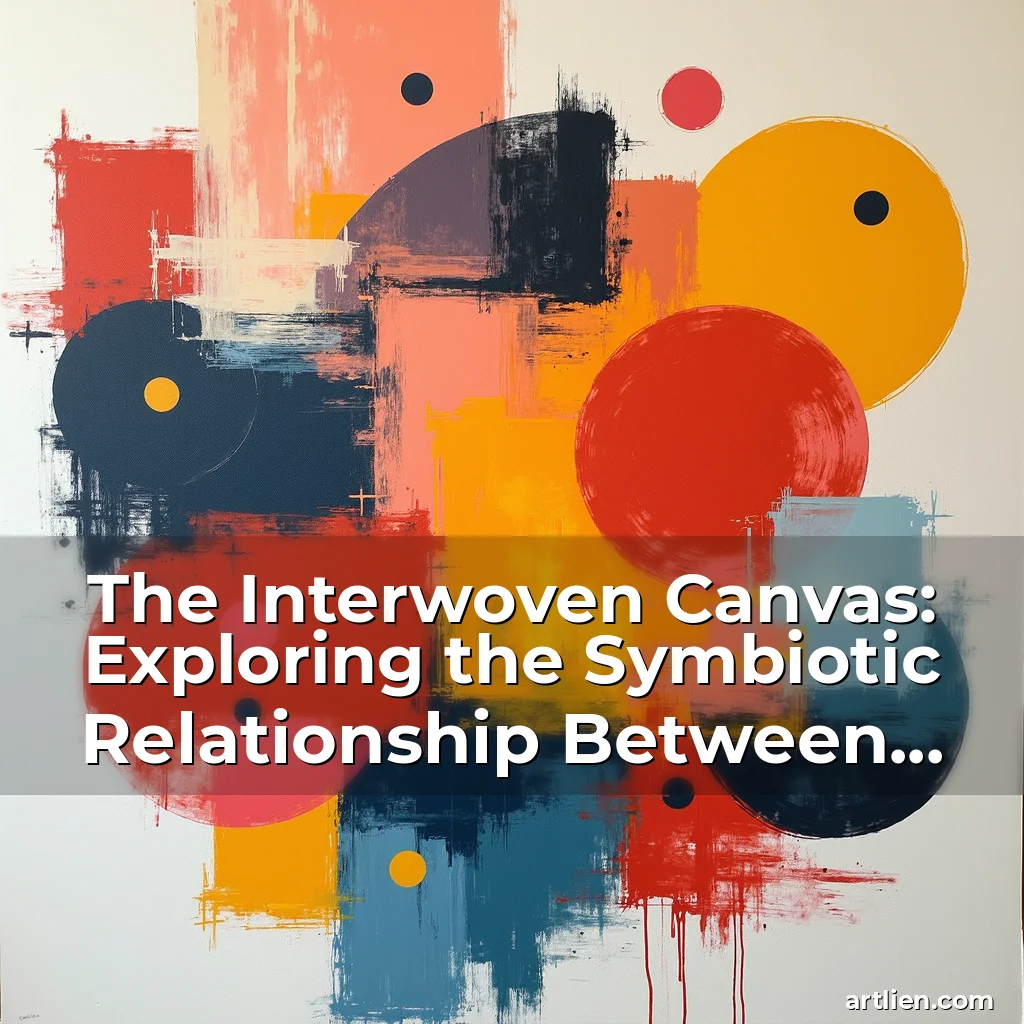
The Interwoven Canvas: Exploring the Symbiotic Relationship Between Photography and Art
In an era where digital innovation meets traditional aesthetics, photography has transcended its role as mere documentation to become a powerful medium of artistic expression. This evolution has redefined how we perceive both photography and visual art, forging connections that blur conventional boundaries.
Artists and photographers alike now navigate a landscape where technical skill intertwines seamlessly with creative vision. The result is a dynamic dialogue between two disciplines that continues to reshape contemporary creativity.
The Historical Evolution of Photographic Artistry
Dating back to the early 19th century, photography emerged from scientific experimentation rather than artistic intent. Pioneers like Louis Daguerre and William Henry Fox Talbot laid the foundation for capturing light onto sensitive surfaces through chemical processes.
This technological breakthrough initially faced skepticism within artistic circles. Many viewed photographs as mechanical reproductions lacking the soul found in paintings or sculptures. However, visionary artists soon recognized their potential beyond mere replication.
By the late 1800s, photographic societies began forming across Europe and North America. These groups provided platforms for practitioners to showcase work alongside established painters and sculptors, gradually shifting perceptions about photography’s place in fine arts.
- Early adopters: Artists such as Nadar and Julia Margaret Cameron used portraiture to explore human emotion and form
- Pictorialist movement: Photographers like Alfred Stieglitz advocated for photography as an autonomous art form through soft-focus techniques
Technical Mastery as Creative Expression
Modern photography demands equal parts technical proficiency and artistic sensibility. Understanding exposure settings, composition principles, and post-processing techniques becomes essential when translating visions into compelling images.
Professional photographers often spend years mastering equipment ranging from vintage film cameras to cutting-edge mirrorless systems. This investment reflects the seriousness with which many treat photographic creation as an art form.
Post-production software opens new avenues for manipulation while maintaining authenticity. Tools like Adobe Lightroom and Photoshop allow artists to enhance colors, adjust tones, and experiment with abstract forms without compromising originality.
The Role of Composition in Visual Storytelling
Composition remains one of photography’s most crucial elements, serving as the framework upon which narratives are built. Just as painters use color theory and brushwork, photographers employ lines, shapes, and negative space to guide viewer interpretation.
Rule of thirds, leading lines, and framing devices function similarly to compositional strategies in painting. These principles help create balance, emphasize subjects, and evoke emotional responses within viewers.
However, experienced artists often break these rules intentionally to produce striking visuals. Such calculated departures can lead to groundbreaking works that challenge conventional aesthetics and provoke deeper contemplation.
Statistical Insights into Compositional Preferences
A 2022 study by the International Society of Professional Photographers revealed intriguing patterns among top-selling images. Approximately 68% adhered closely to classical compositional guidelines, while 22% employed deliberate asymmetry to generate tension.
The remaining 10% consisted primarily of abstract compositions that defied traditional structures entirely. Interestingly, these unconventional pieces commanded higher prices at auctions, suggesting growing appreciation for experimental approaches.
Color Theory in Contemporary Photography
Just as painters rely on color palettes to convey mood and symbolism, photographers manipulate hues, saturation levels, and tonal ranges to achieve similar effects. Digital tools have expanded possibilities far beyond what was achievable in traditional darkrooms.
Cinematic grading techniques borrowed from film production offer unprecedented control over image tone. From desaturated grayscapes evoking melancholy to vibrant neon bursts symbolizing energy, color choices shape entire narrative landscapes.
Multimedia installations increasingly incorporate mixed-media approaches, blending physical objects with projected imagery. These hybrid formats push boundaries by creating immersive environments where photography interacts dynamically with other mediums.
Photography as a Medium for Social Commentary
Beyond aesthetic considerations, photography serves as a potent vehicle for social critique and political discourse. Documentary photographers capture raw realities that demand attention, often sparking conversations about justice, inequality, and environmental degradation.
Famous examples include Dorothea Lange’s Depression-era portraits and Sebastião Salgado’s humanitarian projects. Their work demonstrates how a single photograph can encapsulate complex societal issues in ways words sometimes fail to convey.
Street photographers also contribute significantly to cultural dialogues through candid snapshots of urban life. These unposed moments reveal truths about human behavior and community dynamics that might otherwise go unnoticed.
The Influence of Cultural Context on Photographic Styles
Geographical locations profoundly influence photographic styles, reflecting local traditions, values, and worldviews. Japanese shashin photography emphasizes subtlety and restraint, contrasting sharply with the bold contrasts favored in Mexican muralism-inspired compositions.
Technological access further shapes regional differences. In areas with limited internet connectivity, analog photography thrives despite being less prevalent globally. Conversely, regions with robust tech infrastructure see rapid adoption of AI-assisted imaging solutions.
Economic factors play a critical role too. Developing nations may prioritize documentary photography due to resource constraints, whereas wealthier countries foster greater experimentation with conceptual and avant-garde approaches.
Emerging Trends in Photographic Innovation
The rise of artificial intelligence presents exciting opportunities for creative exploration. Generative adversarial networks (GANs) enable photographers to produce images based on textual prompts, opening doors to previously unimaginable visual expressions.
Augmented reality integration allows for interactive experiences where static photographs transform into dynamic scenes. Museums and galleries increasingly feature AR-enhanced exhibits that invite audiences to engage with artwork in novel dimensions.
Volumetric capture technology enables three-dimensional reconstructions of real-world spaces, blurring distinctions between photography and sculpture. These innovations suggest a future where visual storytelling transcends flat planes altogether.
Educational Pathways for Aspiring Photo-Artists
Formal education provides structured learning environments for developing technical skills and artistic philosophy. Institutions worldwide offer specialized programs combining photography with broader art studies, fostering interdisciplinary understanding.
Online courses provide flexible alternatives for those seeking self-paced instruction. Platforms like MasterClass and Coursera host renowned photographers who share insights gained from decades of professional practice.
Workshops and residencies offer hands-on experience under expert mentorship. These immersive programs encourage risk-taking and experimentation, helping participants refine their personal visual language.
Preservation and Archiving of Photographic Works
Proper preservation ensures that photographic artworks remain accessible for generations. Unlike oil paintings, photographs require specific storage conditions to prevent deterioration caused by humidity, temperature fluctuations, and UV exposure.
Digital archiving introduces new challenges related to file format longevity and data integrity. Organizations like the Library of Congress maintain extensive collections using standardized metadata protocols to ensure long-term accessibility.
Physical prints benefit from acid-free archival materials and protective enclosures. For digital works, regular backups stored across multiple secure servers provide safeguards against loss or corruption.
Conclusion
The evolving relationship between photography and art represents a fascinating intersection of tradition and innovation. As technologies advance and perspectives shift, this symbiosis will continue shaping the creative landscape in unpredictable yet inspiring ways.
For artists and creatives navigating this ever-changing terrain, embracing both historical foundations and emerging trends offers the best path forward. By continually exploring the interplay between technique and imagination, we honor the legacy of past masters while paving the way for future discoveries.

news is a contributor at ArtLien. We are committed to providing well-researched, accurate, and valuable content to our readers.