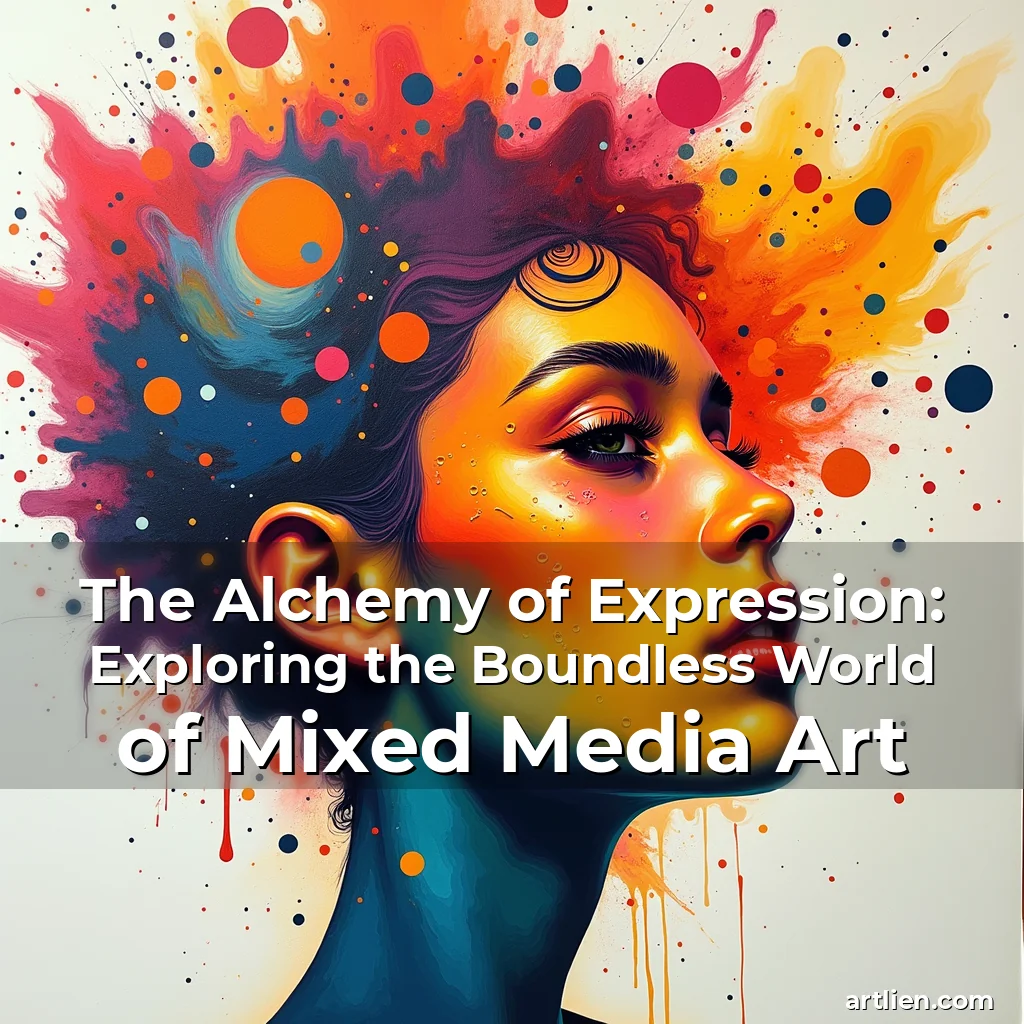
The Alchemy of Expression: Exploring the Boundless World of Mixed Media Art
Mixed media art has emerged as a dynamic force in contemporary creativity, blending diverse materials and techniques to create visually arresting compositions. This innovative approach allows artists to transcend traditional boundaries, merging elements from painting, sculpture, photography, digital design, and even found objects to craft pieces that are both conceptually rich and technically sophisticated.
In an era where artistic expression is increasingly fluid, mixed media offers unparalleled freedom for experimentation and storytelling. Artists can now manipulate textures, layer meanings, and engage audiences through multi-sensory experiences that challenge conventional perceptions of what constitutes a finished artwork.
Forging New Aesthetics Through Material Diversity
The essence of mixed media lies in its ability to combine disparate materials into cohesive visual narratives. From oil paints layered over fabric scraps to digital prints fused with collaged paper, each element contributes uniquely to the final composition’s texture and symbolism.
This material diversity opens endless possibilities for tactile engagement and conceptual depth. An artist might embed newspaper clippings within acrylic layers to comment on historical memory while using metallic leaf accents to suggest timelessness or value.
- Textural contrast: Combining smooth surfaces with rough ones creates visual tension that draws viewers closer for inspection
- Semantic layering: Merging unrelated images can generate unexpected narrative connections when viewed holistically
- Material symbolism: The choice of materials often carries inherent meaning beyond their physical properties
Consider how a collage incorporating vintage maps alongside modern ink splatters could represent themes of exploration versus confinement. Such juxtapositions invite viewers to interpret relationships between past and present, real and imagined spaces.
The key to successful integration lies not in haphazard accumulation but in intentional selection and sequencing of materials that serve the work’s conceptual framework. Each addition must contribute rather than compete within the overall composition.
Evolving Techniques in Contemporary Practice
Modern mixed media artists employ a range of specialized techniques to achieve desired effects. These include decoupage, which involves adhering cut-out paper designs onto surfaces; encaustic painting, utilizing heated beeswax mixed with pigment; and digital transfers that allow photographic imagery to be applied to various substrates.
Advancements in technology have expanded these possibilities dramatically. Digital projection mapping enables artists to animate static artworks, creating immersive environments that shift dynamically based on viewer interaction or environmental factors.
Digital Integration: Bridging Physical and Virtual Realms
Over 68% of contemporary mixed media practitioners incorporate digital elements into their works according to recent surveys by the International Association of Mixed Media Artists. This includes everything from scanned textures used in printmaking to augmented reality components that transform flat canvases into interactive installations.
Such integrations require careful consideration of scale and perspective. For instance, embedding QR codes that link to video interpretations demands precise placement so they don’t overwhelm the primary visual statement yet remain accessible enough for discovery.
The most effective digital applications enhance rather than overshadow the physical medium. When done well, virtual elements can add new dimensions of meaning without diminishing the tangible qualities that make mixed media distinctive.
Artists working at this intersection often develop hybrid workflows, combining hands-on material manipulation with software-based editing tools. This duality reflects the broader philosophical underpinning of mixed media itself – the synthesis of opposites into unified expressions.
Historical Foundations and Cultural Significance
Mixed media isn’t merely a product of technological progress but also deeply rooted in historical practices across cultures. Ancient Egyptian tomb paintings incorporated pigments derived from natural minerals combined with organic binders, creating enduring murals that continue to captivate scholars today.
In Chinese calligraphy, brushwork on silk was sometimes accompanied by embroidered patterns, demonstrating early forms of material combination that predate modern classifications of mixed media. Similarly, Japanese kintsugi repair techniques highlight broken pottery with gold lacquer, transforming flaws into aesthetic features through material intervention.
These traditions demonstrate that cross-media experimentation is far older than commonly assumed. What we now label’mixed media’ has always existed in cultural expressions that valued innovation through material adaptation.
Understanding these roots helps contextualize current trends. Rather than viewing mixed media as purely avant-garde, artists can see themselves as part of an ongoing dialogue with centuries-old practices that embraced transformation through material synthesis.
Crafting Conceptual Depth Through Layered Meaning
A fundamental strength of mixed media lies in its capacity to convey complex ideas through layered associations. By strategically placing different materials next to one another, artists can evoke emotional responses tied to personal memories or collective histories.
For example, incorporating old family photographs into a painted portrait might explore themes of identity formation and intergenerational connection. The aged paper contrasts with fresh paint strokes, suggesting continuity amidst change.
This layering extends beyond visual elements to encompass temporal dimensions as well. A diptych featuring weathered wood on one panel paired with sleek metal on the other could symbolically represent opposing forces – tradition vs. progress, decay vs. regeneration.
Conceptual richness emerges from thoughtful juxtaposition rather than random assembly. Every chosen material becomes a linguistic device conveying meaning through association and contrast.
Navigating Technical Challenges and Solutions
While the creative potential of mixed media is vast, mastering its technical aspects requires careful preparation and problem-solving skills. Issues such as adhesion between dissimilar materials, durability concerns, and color compatibility demand attention during the creative process.
Proper surface preparation is crucial before applying any secondary mediums. Sanding, priming, and testing adhesives ensure long-term stability and prevent unwanted reactions between materials over time.
Selecting compatible substances is equally important. Acrylic gesso provides a suitable base for many combinations, whereas certain resins may react unpredictably with specific types of fibers or fabrics.
Experimentation plays a vital role here – artists often maintain test panels to try out different material pairings before committing them to final works. Documenting these trials helps identify reliable combinations while avoiding costly mistakes.
Curatorial Considerations for Display and Preservation
Exhibiting mixed media artworks presents unique challenges related to conservation and presentation. Unlike uniform canvases, these pieces often contain delicate components requiring special handling and display conditions.
Environmental controls become essential when displaying works with sensitive materials. Humidity levels need careful management for items containing organic matter, while UV protection prevents fading in dyed textiles or pigmented papers.
Curators must collaborate closely with conservators to determine appropriate mounting solutions that support fragile elements without causing damage. Custom-designed supports may be necessary for unconventional formats or three-dimensional aspects.
Lighting considerations are also critical. Soft ambient lighting preserves delicate surfaces better than direct illumination, which can cause discoloration or degradation over extended periods.
Community Engagement and Collaborative Practices
Mixed media thrives in collaborative environments where artists exchange techniques and materials. Community workshops provide opportunities for participants to experiment with unfamiliar substances under expert guidance, fostering innovation through shared knowledge.
Collaborative projects often lead to surprising discoveries about material behavior and aesthetic outcomes. A group exploring textile-based mixed media might uncover new ways to blend embroidery threads with watercolor washes through trial and error together.
These interactions cultivate a culture of openness and curiosity that benefits individual practice as much as collective output. Participants learn not only technical skills but also gain insight into alternative approaches to artistic creation.
Online communities further extend this network effect, allowing global exchanges of ideas and resources. Social media platforms enable artists to showcase experimental processes while seeking feedback from international peers.
Teaching Methods and Educational Applications
Integrating mixed media instruction into formal education equips students with versatile skill sets applicable across disciplines. Workshops focusing on material experimentation encourage analytical thinking about form, function, and meaning in visual communication.
Educators emphasize foundational principles first – understanding basic properties of common materials before moving toward more complex combinations. Students typically begin with simple exercises like paper collage before progressing to layered constructions involving multiple substrates.
Hands-on learning reinforces theoretical concepts through practical application. As students encounter unexpected results, they develop resilience and adaptability essential for creative problem-solving in professional contexts.
Interdisciplinary approaches enrich teaching methods further. Pairing visual arts classes with science courses allows investigations into material chemistry, while history lessons can inform thematic choices in student projects.
Economic Implications and Market Trends
The commercial viability of mixed media varies depending on market segments and regional preferences. In gallery settings, abstract mixed media pieces often command higher prices due to perceived exclusivity and craftsmanship involved.
However, mass-produced mixed media products occupy a different niche altogether. Print-on-demand services allow entrepreneurs to sell custom-designed wall art incorporating digital prints combined with hand-painted elements at lower costs.
Emerging markets show particular interest in sustainable mixed media practices. Consumers increasingly seek eco-friendly options that use recycled materials or biodegradable components without compromising quality or aesthetics.
This trend aligns with broader societal shifts towards environmentally conscious consumption. Artists who embrace upcycling principles find growing appreciation among buyers looking for meaningful, responsible purchases.
The Future Landscape of Mixed Media Innovation
Ongoing research explores novel applications of existing materials and development of entirely new composite substances tailored specifically for mixed media purposes. Scientists are experimenting with nanomaterials that offer enhanced durability while maintaining desirable textural characteristics.
Bioengineered materials represent another frontier in mixed media evolution. Researchers have developed living tissues capable of changing color or pattern in response to environmental stimuli, opening exciting possibilities for interactive artworks.
As sustainability remains central to artistic discourse, future innovations will likely prioritize renewable sources and closed-loop systems that minimize waste production during the creative process.
Ultimately, the trajectory of mixed media depends on continued dialogue between artists, scientists, curators, and collectors who collectively shape its direction through experimentation and preservation efforts alike.
Conclusion
Mixed media art continues to evolve as a powerful vehicle for creative exploration, reflecting our interconnected world through multifaceted visual language. Its legacy spans ancient traditions while embracing cutting-edge technologies that redefine artistic possibilities.
To fully harness this medium’s potential, artists should remain open-minded about material experimentation, invest in proper technique development, and actively engage with the broader creative community. Embracing both historical wisdom and futuristic visions ensures that mixed media remains a vibrant force in shaping tomorrow’s artistic landscape.

news is a contributor at ArtLien. We are committed to providing well-researched, accurate, and valuable content to our readers.